redis连接池源码分析

我们在开发的时候经常会用到redis。java中首选的redis客户端是jedis。jedis封装了redis的所有功能,并且提供了更多额外好用的功能。
你在开发时,可以通过jedis连接redis。jedis支持直连模式和连接池模式。
- 直连模式:
1
2
3
4
5
6
 public static void main(String[] arg){
        //1个实例
        Jedis jedis = new Jedis("127.0.0.1",6379,100);
        jedis.incr("threadSafe");
        jedis.close();
    }
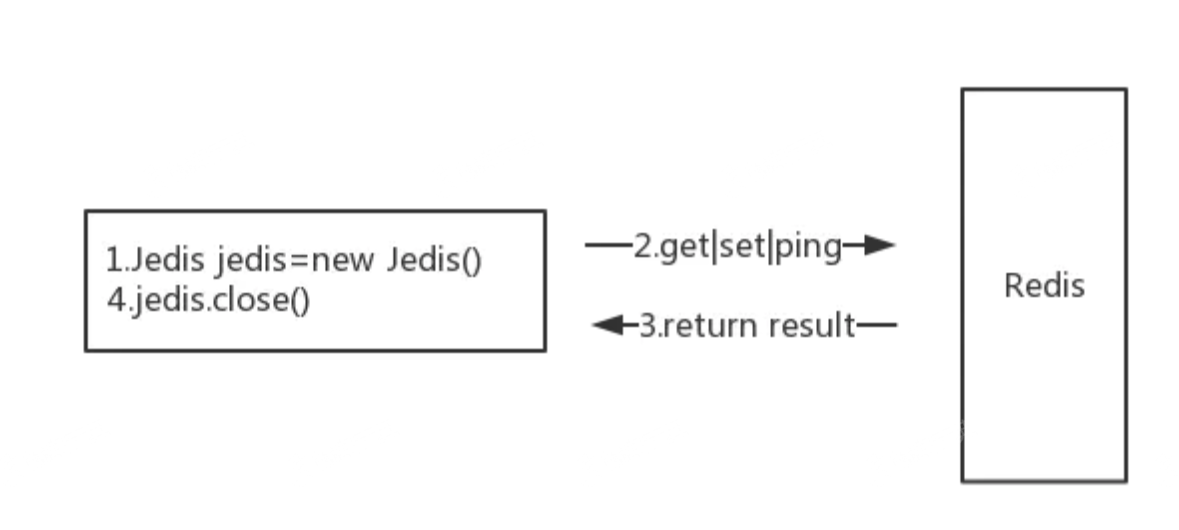
你不应该将一个redis实例共享给不同线程,时用时消的用法会造成产生很多的socket和tcp连接,即浪费时间又耗费资源,也提高了服务不可用的风险。如果你只是在本机环境或者使用者相对少的环境中使用,这种模式比较适宜。但是,如果你需要大量使用redis时,应该采用连接池模式。
- 连接池模式:
1
2
3
4
5
6
7
8
9
10
    public static void main(String[] arg){
        JedisPool pool = new JedisPool(new JedisPoolConfig(),"localhost");
        try (Jedis jedis = pool.getResource()) {
            jedis.set("foo", "bar");
            String foobar = jedis.get("foo");
            jedis.zadd("sose", 0, "car"); jedis.zadd("sose", 0, "bike");
            Set<String> sose = jedis.zrange("sose", 0, -1);
        }
        pool.close();
    }
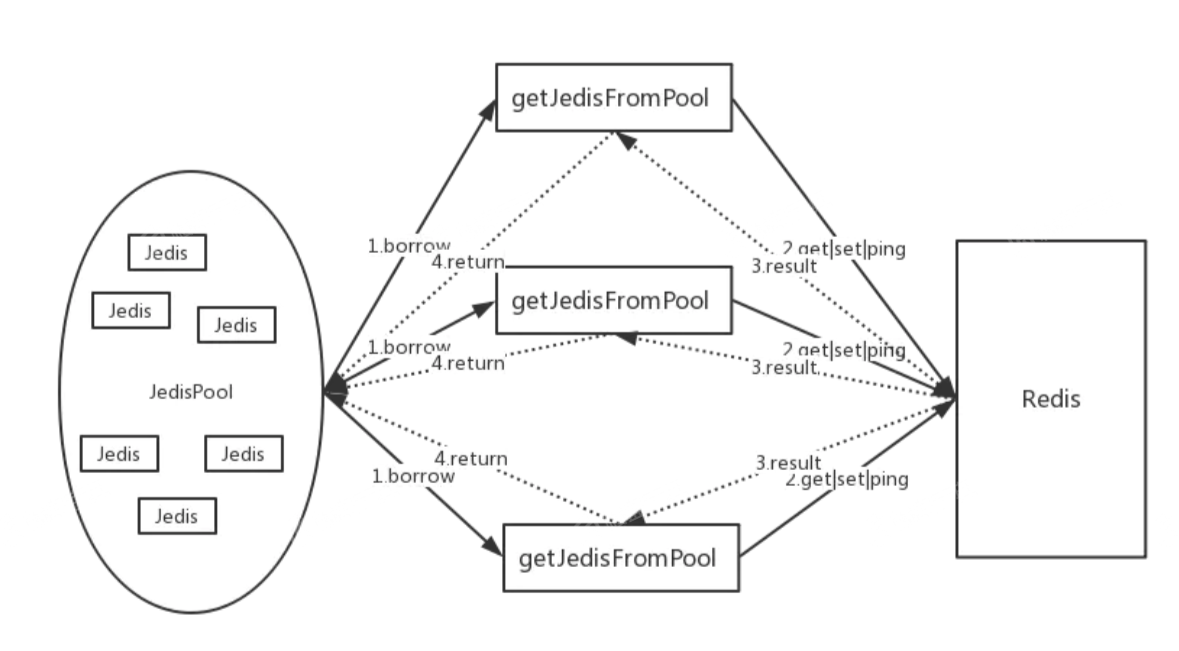
为了避免由单一redis实例引发的未知的服务不可用的风险,我们应该采用这种方案。这种方案背后的原理就是连接池(common-pool2)。当服务到达时服务会从连接池中borrow一个jedis连接,当用完或者发生错误时,连接会归还到连接池中。如果没有borrow到连接,那么服务就会报错且关闭。
我的上一篇池化技术已经提到过连接池的概念,所以这篇文章是我想记录并分享我所学习到的jedis连接池的知识。通过上一段代码我们看到当jedisPool实例化以后,我们从pool中通过getResource来获取一个jedis实例。那么我们的代码研究就从这里开始。
1
2
3
4
5
6
7
8
    //jedis-3.6.0.jar/redis/clients/jedis/jedisPool.class
    public Jedis getResource() {
        //调用父集getResource
        Jedis jedis = (Jedis)super.getResource();
        //将当前实例暴露出dataSource,供后续redis操作使用
        jedis.setDataSource(this);
        return jedis;
    }
1
2
3
4
5
6
7
8
9
10
11
12
13
14
15
16
17
18
19
    //jedis-3.6.0.jar/redis/clients/jedis/client/util/Pool.class
    //genericObjectPool是ObjectPool的实现,ObjectPool是common.pool2中关于池化对象的接口。其中定义了几个标准的对象方法,这些方法就是管理池的核心方法。
    protected GenericObjectPool<T> internalPool;
    ……
    public T getResource() {
        try {
            //通过调用common.pool2中的borrowObject,完成对jedis实例的借取。
            return this.internalPool.borrowObject();
            //如果出现了异常了,按照异常的分类进行处理。
        } catch (NoSuchElementException var2) {
            if (null == var2.getCause()) {
                throw new JedisExhaustedPoolException("Could not get a resource since the pool is exhausted", var2);
            } else {
                throw new JedisException("Could not get a resource from the pool", var2);
            }
        } catch (Exception var3) {
            throw new JedisConnectionException("Could not get a resource from the pool", var3);
        }
    }
在common-pool2中,对象池的核心接口叫做ObjectPool,他定义了对象池的实现的行为。
- addObject方法:往池中添加一个对象。池子里的所有对象都是通过这个方法进来的。
- borrowObject方法:从池中借走到一个对象。借走不等于删除。对象一直都属于池子,只是状态的变化。
- returnObject方法:把对象归还给对象池。归还不等于添加。对象一直都属于池子,只是状态的变化。
- invalidateObject:销毁一个对象。这个方法才会将对象从池子中删除,当然这其中最重要的就是释放对象本身持有的各种资源。
- getNumIdle:返回对象池中有多少对象是空闲的,也就是能够被借走的对象的数量。
- getNumActive:返回对象池中有对象对象是活跃的,也就是已经被借走的,在使用中的对象的数量。
- clear:清理对象池。注意是清理不是清空,改方法要求的是,清理所有空闲对象,释放相关资源。
- close:关闭对象池。这个方法可以达到清空的效果,清理所有对象以及相关资源。
在common-pool2中,objectPool的核心实现类就是GenericObjectPool。
1
2
3
4
5
6
    //commons-pool2.jar/org/apache/commons/pool2/impl/GenericObjectedPool
    @Override
    public T borrowObject() throws Exception {
        //getMaxWaitMillis()是BaseGenericObjectPool中设定的volatile类型的值,代表最长等待时间(毫秒),配置文件中的"maxWait"
        return borrowObject(getMaxWaitMillis());
    }
接下来我们来分析下borrowObject方法,刚才说过borrowObject是实现了ObjectPool。那么先看一下这个接口中对borrowObject的描述。
1
2
3
4
5
6
7
8
9
10
11
12
13
14
15
16
17
18
19
20
21
22
23
24
25
26
27
28
29
30
31
32
33
34
35
36
37
38
    /**
     * Obtains an instance from this pool.
     * <p>
     * Instances returned from this method will have been either newly created
     * with {@link PooledObjectFactory#makeObject} or will be a previously
     * idle object and have been activated with
     * {@link PooledObjectFactory#activateObject} and then validated with
     * {@link PooledObjectFactory#validateObject}.
     * </p>
     * <p>
     * By contract, clients <strong>must</strong> return the borrowed instance
     * using {@link #returnObject}, {@link #invalidateObject}, or a related
     * method as defined in an implementation or sub-interface.
     * </p>
     * <p>
     * The behavior of this method when the pool has been exhausted
     * is not strictly specified (although it may be specified by
     * implementations).
     * </p>
     *
     * @return an instance from this pool.
     *
     * @throws IllegalStateException
     *              after {@link #close close} has been called on this pool.
     * @throws Exception
     *              when {@link PooledObjectFactory#makeObject} throws an
     *              exception.
     * @throws NoSuchElementException
     *              when the pool is exhausted and cannot or will not return
     *              another instance.
     */
     /*
     这个method返回实例,这个实例将是一个被makeObject()创建的对象,或者是一个之前就是idle并且经过activateObject()激活过的并且经过validatedObject()验证过的对象。
     根据约定,客户端必须调用过returenObject(),invalidateObject()或者一个在子类中实现了归还逻辑的方法后归还。
     这个方法在池子耗尽时的表现没有指明具体如何处理(尽管他有可能被他的实现制定过。)
     */
    T borrowObject() throws Exception, NoSuchElementException,
            IllegalStateException;
接着我们再来看看这个方法的具体实现。
1
2
3
4
5
6
7
8
9
10
11
12
13
14
15
16
17
18
19
20
21
22
23
24
25
26
27
28
29
30
31
32
33
34
35
36
37
38
39
40
41
42
43
44
45
46
47
48
49
50
51
52
53
54
55
56
57
58
59
60
61
62
63
64
65
66
67
68
69
70
71
72
73
74
75
76
77
78
79
80
81
82
83
84
85
86
87
88
89
90
91
92
93
94
95
96
97
98
99
100
101
102
103
104
105
106
107
108
109
110
111
112
113
114
115
116
117
118
119
120
121
122
123
124
125
126
127
128
129
130
131
132
133
134
135
136
137
138
139
140
141
142
143
144
145
146
147
148
149
150
151
152
153
154
155
156
157
158
159
160
161
162
163
164
165
166
167
168
169
170
171
172
173
174
175
176
177
178
179
180
181
182
183
184
185
186
187
188
189
190
191
192
193
194
195
196
197
198
199
200
201
202
203
204
205
206
207
208
209
210
211
212
213
214
215
216
217
218
219
220
221
    //commons-pool2.jar/org/apache/commons/pool2/impl/GenericObjectPool.class
    /**
     * Equivalent to <code>{@link #borrowObject(long)
     * borrowObject}({@link #getMaxWaitMillis()})</code>.
     * <p>
     * {@inheritDoc}
     * </p>
     */
     //通过获取配置中MaxWait配置,当做传输调用重载的方法。
    @Override
    public T borrowObject() throws Exception {
        return borrowObject(getMaxWaitMillis());
    }

    /**
     * Borrows an object from the pool using the specific waiting time which only
     * applies if {@link #getBlockWhenExhausted()} is true.
     * <p>
     * If there is one or more idle instance available in the pool, then an
     * idle instance will be selected based on the value of {@link #getLifo()},
     * activated and returned. If activation fails, or {@link #getTestOnBorrow()
     * testOnBorrow} is set to {@code true} and validation fails, the
     * instance is destroyed and the next available instance is examined. This
     * continues until either a valid instance is returned or there are no more
     * idle instances available.
     * </p>
     * <p>
     * If there are no idle instances available in the pool, behavior depends on
     * the {@link #getMaxTotal() maxTotal}, (if applicable)
     * {@link #getBlockWhenExhausted()} and the value passed in to the
     * {@code borrowMaxWaitMillis} parameter. If the number of instances
     * checked out from the pool is less than {@code maxTotal,} a new
     * instance is created, activated and (if applicable) validated and returned
     * to the caller. If validation fails, a {@code NoSuchElementException}
     * is thrown.
     * </p>
     * <p>
     * If the pool is exhausted (no available idle instances and no capacity to
     * create new ones), this method will either block (if
     * {@link #getBlockWhenExhausted()} is true) or throw a
     * {@code NoSuchElementException} (if
     * {@link #getBlockWhenExhausted()} is false). The length of time that this
     * method will block when {@link #getBlockWhenExhausted()} is true is
     * determined by the value passed in to the {@code borrowMaxWaitMillis}
     * parameter.
     * </p>
     * <p>
     * When the pool is exhausted, multiple calling threads may be
     * simultaneously blocked waiting for instances to become available. A
     * "fairness" algorithm has been implemented to ensure that threads receive
     * available instances in request arrival order.
     * </p>
     *
     * @param borrowMaxWaitMillis The time to wait in milliseconds for an object
     *                            to become available
     *
     * @return object instance from the pool
     *
     * @throws NoSuchElementException if an instance cannot be returned
     *
     * @throws Exception if an object instance cannot be returned due to an
     *                   error
     */
     /*
     当getBlockWhenExhausted()返回true时,需要提供等待时间从对象池中借出对象,
     如果有1个或多个空闲实例的话,就通过getLifo()方法,也就是先进先出的策略选择由哪个空闲实例承接工作。如果激活失败了,或者testOnBorrow设置为true并且检测失败了,这个实例就会销毁,接下来由下一个可用实例进行承接。这个流程一直持续,直到没有可用的实例可供使用或者没有空闲实例可供使用。
     如果在对象池中没有空闲实例了,接下来的走向取决于maxTotal,getBlockWhenExhausted()和传进来的等待时间参数决定。如果当前对象池中的实力数量小于maxtotal,一个新的实例将被创建,激活并且检测最终返回给调用者。如果检测失败,一个NoSuchElementException异常将被抛出。
     如果对象池已经占满了(也就是说没有可用的空闲实例并且没有容量可以被创建),这个方法要不堵塞(如果getBlockWhenExhausted设置为true的情况下才会堵塞)要不就抛出一个NoSuchElementException(相反getBlockWhenExhausted为false的情况)异常。具体阻塞的时间跟传入的borrowMaxWaitMillis时间大小有关。(还记得刚才说的maxWait的设置么?)
     当对象池已经耗尽,多个调用线程将被同时堵塞,他们一起等待可用的jedis实例接客。接客的规则采用公平算法。其实就是先到先被接~哈哈
     */
    public T borrowObject(final long borrowMaxWaitMillis) throws Exception {
        //这一步就是检查一下对象池的状态,如果之前已经关闭了,就会抛出IllegalStateException异常。
        assertOpen();
        //移除已经被抛弃的实例
        final AbandonedConfig ac = this.abandonedConfig;
        if (ac != null && ac.getRemoveAbandonedOnBorrow() &&
                (getNumIdle() < 2) &&
                (getNumActive() > getMaxTotal() - 3) ) {
            /*
            被抛弃的实例不为null
            borrow时去除被抛弃的实例
            空闲线程实例<2
            当前活动的实例数量大于最大实例数量-3
            */
            removeAbandoned(ac);
        }
        //定义一个PooledObject类型的对象,T是真正的实例对象。如jedis,db等。
        PooledObject<T> p = null;

        // Get local copy of current config so it is consistent for entire
        // method execution
        /*
        获取一个本地的拷贝,这个拷贝是目前的配置。这样就能够保证整体的一致性。
        这个getBlockWhenExhausted()最终是获取的一个volatile类型的值,这个值是从配置中获取的,代表当线程池满时,是否对新来的任务给予堵塞。但是,我们得注意volatile这个类型了,而且设计者在这个地方单独获取出来这个值,肯定是为了什么。接着往下看吧。
        */
        final boolean blockWhenExhausted = getBlockWhenExhausted();
        //是否为新建,请区别于created。为什么仅在这里定义了变量而没有初始化呢?
        boolean create;
        //当前的毫秒,用来就算
        final long waitTime = System.currentTimeMillis();
        //循环开始,第一次p=null开始循环
        while (p == null) {
            //初始化create=false,代表目前这个线程不是新建的。
            create = false;
            /*
            private final LinkedBlockingDeque<PooledObject<T>> idleObjects;
            idleObjects是一个阻塞有序队列,队列的类型是刚才的封装类型,封装的是实际的资源。从名字上可以看出,这里叫做空闲对象组
            可以看到,从空闲对象组里拿出第一个元素。pollFirst()是LinkedBlockingDeque.java中的方法。就是通过操作节点来把第一个节点删除并返回。
            */
            p = idleObjects.pollFirst();
            //如果p为空代表弹出的是null,说明没有空闲。那就创建一个新的对象。
            if (p == null) {
                p = create();
                //p可能会创建失败,创建失败的时候 create=false。 创建成功create=true
                if (p != null) {
                    create = true;
                }
            }
            //如果设置了对象池耗尽后堵塞等待的标示
            if (blockWhenExhausted) {
                if (p == null) {
                    //p没有创建成功
                    if (borrowMaxWaitMillis < 0) {
                        //如果没有设置为-1,只有这种情况会符合小于0.所以就直接从空闲对象组中获取第一个有效的空闲对象。这个方法有锁的实现,所以这块可能会一直堵塞着直到有一个空闲对象可以使用。
                        p = idleObjects.takeFirst();
                    } else {
                    //如果设置等待时间了,就在这段时间里获取。超过了就返回null
                        p = idleObjects.pollFirst(borrowMaxWaitMillis,
                                TimeUnit.MILLISECONDS);
                    }
                }
                //到这里如果还是空,就说明没等待到空闲的资源了。所以就要报异常了。
                if (p == null) {
                    throw new NoSuchElementException(
                            "Timeout waiting for idle object");
                }
            } else {
                //如果没有设置blockWhenExhausted标示且p是null,那真是获取不到资源了,因为池子已经被占满了。
                if (p == null) {
                    throw new NoSuchElementException("Pool exhausted");
                }
            }
            /*
            到这里其实p应该不是null了,说明肯定是有资源了。有可能是获得了空闲资源或是创建了一个新的资源。这个时候就要让系统给他分配内存了。跟进allocate()代码中,发现这是一个synchronized方法,保证了线程安全。(这块会有线程安全问题。为什么呢?)方法体判断了当前池状态(空闲状态或者测试中状态)然后更改状态位,置lastBorrowTime,lastUseTime,borrowedCount++等,然后返回boolean。
            我们可以推算出,当前的池资源状态可能会被另一个线程改写。有一种情况就是,空闲的连接还需要进行test和validate才能够正确分配。但是如果在test或validate阶段失败了,那线程就不能够被分配资源了,因为前后状态不一致了。所以需要allocate的同步操作来保证当时的空闲资源不被改写。
            */
            if (!p.allocate()) {
                //没有成功分配资源,当然p就应该置为null,等待重新进行遍历。
                p = null;
            }
            //到这里,分配成功的p应该进行校验阶段了。没有成功分配的p目前还是null,所以跳过下面的判断。
            if (p != null) {
                //从这开始p是有资源了
                try {
                    /*
                    private final PooledObjectFactory<T> factory;
                    通过池工厂(PooledObjectFactory.java)对返回来的实例重新初始化。因为PooledObjectFactory是个接口。所以,我以Jedis为T进行解析(JedisFactory.java),别的实际类型会有不同的行为,但是基本差不多。
        这个方法里就是获取了BinaryJedis,判断当前的库是不是库0.如果不是就就简单做个select操作。如果是的话什么都不做。
                    这块的设计有一个小心思,就是作者用这种代码结构来给开发者留出了很大的实现空间。
                    */
                    factory.activateObject(p);
                } catch (final Exception e) {
                    //激活异常
                    try {
                        //摧毁对象,释放资源
                        destroy(p, DestroyMode.NORMAL);
                    } catch (final Exception e1) {
                        // 摧毁的程序都报异常了,我可管不了了。采取鸵鸟算法。
                    }
                    //help GC
                    p = null;
                    //如果是新建的资源,就说明分配成功,但是激活失败。抛个错吧。
                    if (create) {
                        final NoSuchElementException nsee = new NoSuchElementException(
                                "Unable to activate object");
                        //用什么错误原因呢?就用上面这个吧
                        nsee.initCause(e);
                        throw nsee;
                    }
                }
                /*
                如果分配成功了, 激活也成功了,并且开启了TestOnBorrow,逻辑进来再让我蹂躏下吧。如果失败了跳过这个逻辑吧。
                testOnBorrow的目的是不论资源是否是从池子里借的,都要在返回钱进行一次验证。如果失败了资源会被清除出池子并且毁掉。然后再向池对象尝试借一次。
                */
                if (p != null && getTestOnBorrow()) {
                    boolean validate = false;
                    Throwable validationThrowable = null;
                    try {
                    /*
                    我依然以JedisFactory.java分析吧。
                    依然是首先获取一个BinaryJedis资源。判断连接的Port和设置的port是否相等。判断连接的host和设置额host是否相等。相等就返回true。否则就返回false。
                    */
                        validate = factory.validateObject(p);
                    } catch (final Throwable t) {
                        PoolUtils.checkRethrow(t);
                        validationThrowable = t;
                    }
                    //如果检查没有通过依然是摧毁。如果是新建的就报错。和上面激活的流程一样。
                    if (!validate) {
                        try {
                            destroy(p, DestroyMode.NORMAL);
                            destroyedByBorrowValidationCount.incrementAndGet();
                        } catch (final Exception e) {
                            // Ignore - validation failure is more important
                        }
                        p = null;
                        if (create) {
                            final NoSuchElementException nsee = new NoSuchElementException(
                                    "Unable to validate object");
                            nsee.initCause(validationThrowable);
                            throw nsee;
                        }
                    }
                }
            }
        }
        //恭喜获得了一个有效的p资源。然后统计一下数据吧,比如消耗时间。
        updateStatsBorrow(p, System.currentTimeMillis() - waitTime);
        //返回吧。记住返回的是一个PooledObject对象。真正的资源需要通过getObject()获取。
        return p.getObject();
    }
至此,看懂了jedis是如何从连接池中拿到资源的了。这里面经常有一些线程安全的判断,这也是难点所在,因为池化技术最重要的功能就是对线程资源的管理与利用。所以,代码中用了很多sychronize方法。不光这些,作者还要考虑到资源的释放和销毁还有扩展。
最后看到了getObject()方法。为什么作者不直接暴露资源呢?为什么还要包一层呢?接下来我来分析一下吧。PooledObject是一个接口,我们先看看接口的描述是什么。详情看我的之前一篇文章common-pool对象池学习
1
2
3
4
5
6
7
8
9
10
11
12
13
14
15
16
17
/**
 * Defines the wrapper that is used to track the additional information, such as
 * state, for the pooled objects.
 * <p>
 * Implementations of this class are required to be thread-safe.
 * </p>
 *
 * @param <T> the type of object in the pool
 *
 * @since 2.0
 */
 /*
 定义一个封装结构,这个封装结构使用来记录额外信息的。比如池资源的状态等。
 实现这个接口的class文件必须是线程安全的。(为什么呢?)

 */
public interface PooledObject<T> extends Comparable<PooledObject<T>> {}
参考资料: