sentinel降级背后的原理解析
介绍
Sentinel是阿里中间件团队开源的,面向分布式服务加购的轻量级高可用流量控制组件,主要以流量为切入点,从流量控制、熔断降级、系统负载保护等多个维度来帮助用户保护服务的稳定性。
首先让我们比对下目前业界流行的熔断降级库Netfilix Hystrix的异同。
项目结构
这是sentinel项目的整体结构图:
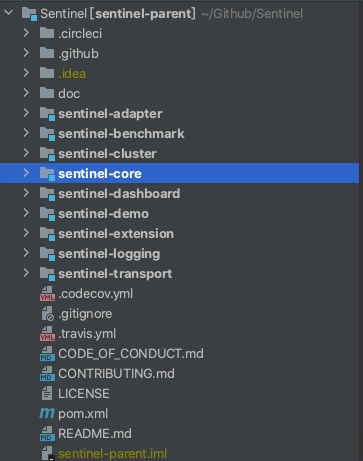
- sentinel-core 核心模块,限流、降级、系统保护等都在这里。因为这样可以单独提供sdk。
- sentinel-dashboard 控制后台,可以对sentinal客户端进行可视化管理。
- sentinel-transport 传输模块,提供基本的监控服务端和客户端的API接口。
- sentinel-extension 扩展模块,主要对dataSource进行了部分扩展实现。
- sentinel-adapter 适配器模块,主要实现了对一些常见框架的适配。
- sentinel-demo 样例,里面教你如何使用限流、降级等。
- sentinel-benchmark 基准测试模块,对核心代码的精确性提供基准测试。
运行样例
在sentinel-demo模块中有很多不同的样例,我们找到FlowQpsDemo,看看限流的样例。限流有很多种类的限流,先找qps限流的类来看。
1
2
3
4
5
6
7
8
9
10
11
12
13
14
15
16
17
18
19
20
21
22
23
24
25
26
27
28
29
30
31
32
33
34
35
36
37
38
39
40
41
42
43
44
45
46
47
48
49
50
51
52
53
54
55
56
57
58
59
60
61
62
63
64
65
66
67
68
69
70
71
72
73
74
75
76
77
78
79
80
81
82
83
84
85
86
87
88
89
90
91
92
93
94
95
96
97
98
99
100
101
102
103
104
105
106
107
108
109
110
111
112
113
114
115
116
117
118
119
120
121
122
123
124
125
126
127
128
129
130
131
132
133
134
135
136
137
138
139
140
141
142
143
144
145
146
147
148
149
150
151
152
153
154
155
156
157
158
159
160
161
162
163
164
/*
有一个TimeTicker线程在做统计,每1秒钟做一次。有N个RunTask线程在模拟请求,被访问的business code被资源key保护着,根据规则,每秒只允许20个请求通过。
*/
public class FlowQpsDemo {

    //key是qps江流的隔离名称
    private static final String KEY = "abc";

    /*
    全局共享三个变量
    使用原子整形类型变量记录通过,拦截及总体数量。
    利用AtomicInteger就是因为原子性的特性,可以帮助我们防止多线程的安全问题。
    */
    private static AtomicInteger pass = new AtomicInteger();
    private static AtomicInteger block = new AtomicInteger();
    private static AtomicInteger total = new AtomicInteger();

    private static volatile boolean stop = false;

    //线程总数
    private static final int threadCount = 32;

    //时间为 100s
    private static int seconds = 60 + 40;

    public static void main(String[] args) throws Exception {
        initFlowQpsRule();

        tick();
        // first make the system run on a very low condition
        simulateTraffic();

        System.out.println("===== begin to do flow control");
        System.out.println("only 20 requests per second can pass");

    }

    /*
    初始化限流规则
    */
    private static void initFlowQpsRule() {
        List<FlowRule> rules = new ArrayList<FlowRule>();
        FlowRule rule1 = new FlowRule();
        rule1.setResource(KEY);
        //设置qps最大值20个
        rule1.setCount(20);
        //设置限流类型:根据qps
        rule1.setGrade(RuleConstant.FLOW_GRADE_QPS);
        //需要被限制的应用名称。default代表允许全部应用
        rule1.setLimitApp("default");
        rules.add(rule1);
        FlowRuleManager.loadRules(rules);
    }

    //模拟请求。并发32个线程运行 RunTask()任务
    private static void simulateTraffic() {
        for (int i = 0; i < threadCount; i++) {
            Thread t = new Thread(new RunTask());
            t.setName("simulate-traffic-Task");
            t.start();
        }
    }

    //启动一个线程来运行TimerTask()任务。
    private static void tick() {
        Thread timer = new Thread(new TimerTask());
        timer.setName("sentinel-timer-task");
        timer.start();
    }

    //记录相关事件时间耗时的,tick()调用的所以就运行1次。
    static class TimerTask implements Runnable {

        @Override
        public void run() {
            long start = System.currentTimeMillis();
            System.out.println("begin to statistic!!!");

            long oldTotal = 0;
            long oldPass = 0;
            long oldBlock = 0;
            /*
            循环。

            */
            while (!stop) {
                try {
                    //1秒执行一次
                    TimeUnit.SECONDS.sleep(1);
                } catch (InterruptedException e) {
                }
                //全局总数量
                long globalTotal = total.get();
                //一秒内的全部数量
                long oneSecondTotal = globalTotal - oldTotal;
                //
                oldTotal = globalTotal;

                long globalPass = pass.get();
                //一秒内通过的数量
                long oneSecondPass = globalPass - oldPass;
                oldPass = globalPass;

                long globalBlock = block.get();
                //一秒内拒绝的数量
                long oneSecondBlock = globalBlock - oldBlock;
                oldBlock = globalBlock;

                System.out.println(seconds + " send qps is: " + oneSecondTotal);
                System.out.println(TimeUtil.currentTimeMillis() + ", total:" + oneSecondTotal
                    + ", pass:" + oneSecondPass
                    + ", block:" + oneSecondBlock);
                //当时间耗尽时,停止循环
                if (seconds-- <= 0) {
                    stop = true;
                }
            }
            //整个线程耗时
            long cost = System.currentTimeMillis() - start;
            System.out.println("time cost: " + cost + " ms");
            System.out.println("total:" + total.get() + ", pass:" + pass.get()
                + ", block:" + block.get());
            System.exit(0);
        }
    }

    //
    static class RunTask implements Runnable {
        @Override
        public void run() {
            while (!stop) {
                Entry entry = null;

                try {
                    //进行限流,采用key。因为已经在上面的方法里设置了限流策略了,所以在这个线程中,会自动按照限流策略进行限流的。我们只需要对结果进行监控,然后执行之后逻辑即可。
                    entry = SphU.entry(KEY);
                    // 如果没有抛出异常的话,就说明通过了。就给pass+1
                    pass.addAndGet(1);
                } catch (BlockException e1) {
                    获得了BlockExcepton就给block+1
                    block.incrementAndGet();
                } catch (Exception e2) {
                    // 这个是在业务中抛出了异常了。需要对业务逻辑异常处理
                } finally {
                    //都会走到这里,给total+1
                    total.incrementAndGet();
                    //限流策略退出
                    if (entry != null) {
                        entry.exit();
                    }
                }

                Random random2 = new Random();
                try {
                    //随机睡一会
                    TimeUnit.MILLISECONDS.sleep(random2.nextInt(50));
                } catch (InterruptedException e) {
                    // ignore
                }
            }
        }
    }
}
运行程序后,结果如下:
begin to statistic!!!
===== begin to do flow control
only 20 requests per second can pass
100 send qps is: 1125
1621777621479, total:1125, pass:32, block:1093
99 send qps is: 1195
1621777622478, total:1195, pass:20, block:1175
98 send qps is: 1168
1621777623481, total:1168, pass:20, block:1148
97 send qps is: 1198
1621777624481, total:1198, pass:21, block:1177
96 send qps is: 1155
1621777625486, total:1155, pass:20, block:1135
95 send qps is: 1210
1621777626491, total:1210, pass:20, block:1190
94 send qps is: 1163
1621777627495, total:1163, pass:23, block:1140
93 send qps is: 1158
1621777628498, total:1158, pass:20, block:1138
可以看到,上面的结果中,pass的数量和我们设置的不一样。我们设定的是每秒可以pass的数量是20个。但是有很多的请求都是超过20个的。
原因是SphU.entry(KEY)的内部是没有加锁的,所以就会在高并发的情况下,pass的数量就会高于20.由于pass、block、total是全局共享的,而多个RunTask()线程在执行SphU.entry(KEY)申请获取entry时,内部没有所保护,所以会存在pass的个数超过设定的阈值。

接下来,我把threadCount改为1,只有一个线程来执行这个方法,结果如下。
begin to statistic!!!
===== begin to do flow control
only 20 requests per second can pass
100 send qps is: 36
1621784048375, total:36, pass:26, block:10
99 send qps is: 37
1621784049379, total:37, pass:20, block:17
98 send qps is: 33
1621784050384, total:33, pass:20, block:13
97 send qps is: 39
1621784051389, total:39, pass:20, block:19
96 send qps is: 35
1621784052394, total:35, pass:20, block:15
95 send qps is: 33
1621784053398, total:33, pass:20, block:13
深入原理
一切的开始让我们从SphU.entry()开始。
1
2
3
4
5
6
7
8
9
10
public class SphU {

    ……

    /*
    为给定的resource记录统计数据并且执行方法检查
    */
    public static Entry entry(String name) throws BlockException {
        return Env.sph.entry(name, EntryType.OUT, 1, OBJECTS0);
    }
1
2
3
4
5
6
7
8
9
10
11
12
13
14
/*
sentinel的环境类,这个类会触发所有的sentinel的初始化
这个类有个特殊注意到的地方,为了防止程序上的deadlock。不能让其他的类的静态方法块或者静态变量不要指向这个类。
*/
public class Env {

    //主要是这块代码
    public static final Sph sph = new CtSph();

    static {
        // If init fails, the process will exit.
        InitExecutor.doInit();
    }
}
SphU.entry中Env是一个类,我们知道在JVM的生命周期里,每个类都会被加载一次,而且加载的原则是懒加载。这个类中有个Sph类型的静态变量,指向了实例化后的CtSph()。也就是说Env.sph.entry()最终是调用了CtsSph.entry()。
1
2
3
4
5
6
7
8
9
10
11
12
13
14
15
16
17
18
19
20
21
22
23
24
25
26
27
28
29
30
31
32
33
34
35
36
37
38
39
40
41
42
43
44
45
46
47
48
49
50
51
52
53
54
55
56
57
58
59
60
public class CtsSph {

    /*
    检查所有resource的限流规则
    每个唯一的resource会用一个ProcessorSlot做限流检查。同样的resource会用同样的ProcessorSlot。
    注意的是ProcessorSlot总数不能超过配置的MAX_SLOT_CHAIN_SIZE值。否则,所有的限流检查都会终止。也就是说同一时刻的所有请求都会通过,没有任何限流。
    */
    public Entry entry(ResourceWrapper resourceWrapper, int count, Object... args) throws BlockException {
        return entryWithPriority(resourceWrapper, count, false, args);
    }

    /*
    这个方法是具体的实现,也是比较重要的。
    */
    private Entry entryWithPriority(ResourceWrapper resourceWrapper, int count, boolean prioritized, Object... args)
        throws BlockException {

        //获取当前的上线文
        Context context = ContextUtil.getContext();
        if (context instanceof NullContext) {
            // The {@link NullContext} indicates that the amount of context has exceeded the threshold,
            // so here init the entry only. No rule checking will be done.
            //NullContext代表的是上下文数量已经超过了阈值,所以这里初始化CtEntry,就是不会做任何限流检查。
            return new CtEntry(resourceWrapper, null, context);
        }

        //如果没有上下文就给一个默认的上下文。
        if (context == null) {
            // Using default context.
            context = InternalContextUtil.internalEnter(Constants.CONTEXT_DEFAULT_NAME);
        }

        // 开关,可以控制是否做限流检查
        if (!Constants.ON) {
            return new CtEntry(resourceWrapper, null, context);
        }

        //这个比较重要,获取该资源对应的SlotChain
        ProcessorSlot<Object> chain = lookProcessChain(resourceWrapper);

         //slot chain超过了Constants.MAX_SLOT_CHAIN_SIZE。所以就是说没有限流检查
        if (chain == null) {
            return new CtEntry(resourceWrapper, null, context);
        }

        Entry e = new CtEntry(resourceWrapper, chain, context);
        try {
            // 执行Slot的entry方法
            chain.entry(context, resourceWrapper, null, count, prioritized, args);
        } catch (BlockException e1) {
            // 抛出BlockExecption
            e.exit(count, args);
            throw e1;
        } catch (Throwable e1) {
            // This should not happen, unless there are errors existing in Sentinel internal.
            RecordLog.info("Sentinel unexpected exception", e1);
        }
        return e;
    }
}
这个方法可以分为以下几个部分:
- 对参数和全局配置做检测,如果不符合要求就返回一个CtEntry对象,不会再进行任何限流检测。否则就会进入检测流程。
- 根据包装过的资源对象获取对应的SlotChain
- 执行SlotChain的entry方法,如果抛出了BlockExecption就代表被限流了。如果没有就返回Entry对象
ProcessorSlot是什么
我们先来看看ProcessorSlot到底是个什么东西。他是一个接口,详细的请看下面的程序解释。
1
2
3
4
5
6
7
8
9
10
11
12
13
14
15
16
17
18
19
20
21
22
23
/*
某些流程的容器,以及流程完成时的通知方式。

直译的话就是处理器插槽,是sentinel实现限流降级、熔断降级、系统自适应降级等功能的切入点。Sentinel 提供的 ProcessorSlot 可以分为两类,一类是辅助完成资源指标数据统计的切入点,一类是实现降级功能的切入点。
*/
public interface ProcessorSlot<T> {

    //slot的入口
    void entry(Context context, ResourceWrapper resourceWrapper, T param, int count, boolean prioritized,
               Object... args) throws Throwable;


     //触发入entry
    void fireEntry(Context context, ResourceWrapper resourceWrapper, Object obj, int count, boolean prioritized,
                   Object... args) throws Throwable;

     //slot的出口
    void exit(Context context, ResourceWrapper resourceWrapper, int count, Object... args);

     //触发出entry
    void fireExit(Context context, ResourceWrapper resourceWrapper, int count, Object... args);
}
通过实现关系,我们可以看到这两类ProcessorSlot分别是:
辅助资源指标数据统计的 ProcessorSlot:
- NodeSelectorSlot:为当前资源创建 DefaultNode
- ClusterBuilderSlot:如果当前资源未创建 ClusterNode,则为资源创建 ClusterNode;将 ClusterNode 赋值给当前资源的 DefaultNode.clusterNode;如果调用来源(origin)不为空,则为调用来源创建 StatisticNode,用于实现按调用来源统计资源的指标数据,ClusterNode 持有每个调用来源的 StatisticNode。
- StatisticSlot:这是 Sentinel 最为重要的类之一,用于实现指标数据统计。先是调用后续的 ProcessorSlot#entry 判断是否放行请求,再根据判断结果进行相应的指标数据统计操作。
实现降级功能的 ProcessorSlot:
- AuthoritySlot:实现黑白名单降级
- SystemSlot:实现系统自适应降级
- FlowSlot:实现限流降级
- DegradeSlot:实现熔断降级
ProcessorSlot 的创建
然后我们看看是如何将ProcessorSlot创建成链的:
1
2
3
4
5
6
7
8
9
10
11
12
13
14
15
16
17
18
19
20
21
22
23
24
25
26
27
28
29
30
31
32
33
 //通过slot chain builder SPI提供的创建slot链的类
public final class SlotChainProvider {

    private static volatile SlotChainBuilder slotChainBuilder = null;


     /*
     加载和选择进程不是线程安全的,但是如果只是通过lookProcessChain()方法调用就可以,因为CtSph是带锁的。一会就能看到lookProcessChain这个方法了。这个方法是有synchronized的。
     */
    public static ProcessorSlotChain newSlotChain() {
        if (slotChainBuilder != null) {
            return slotChainBuilder.build();
        }

        //通过chain builder的SPI来实现代码和业务的隔离,也就是说通过配置文件来选择可用的builder.以此builder来创建ProcessorSlotChain
        slotChainBuilder = SpiLoader.of(SlotChainBuilder.class).loadFirstInstanceOrDefault();

        if (slotChainBuilder == null) {
            // Should not go through here.
            //一般来说不应该为null,因为作者已经预留了文件在resources的META-INF中。但是为了万一,还是判断一下,给出个解决方案。
            RecordLog.warn("[SlotChainProvider] Wrong state when resolving slot chain builder, using default");
            slotChainBuilder = new DefaultSlotChainBuilder();
        } else {
            RecordLog.info("[SlotChainProvider] Global slot chain builder resolved: {}",
                slotChainBuilder.getClass().getCanonicalName());
        }
        //返回,用选择的builder调用build方法,创建ProcessorSlotChain
        return slotChainBuilder.build();
    }

    private SlotChainProvider() {}
}
我很感兴趣slotChainBuilder,于是就去看了眼这个类。其实他是一个接口,接口中就一个build()方法。目前系统提供了两种实现,一个是DefaultSlotChainBuilder,一个是DemoSlotChainBuilder。这块对后续的增加留下了扩展性。主要体现的是建造者模式思想。
1
2
3
4
5
public interface SlotChainBuilder {

     //构造 processor slot chain
    ProcessorSlotChain build();
}
那接下来我选择DemoSlotChainBuilder看下怎么实现的。
1
2
3
4
5
6
7
8
9
10
11
12
13
14
15
16
17
18
19
20
21
22
23
24
25
26
27
/*
一个例子来讲述如何自定义建造一个slot chain
*/
@Spi
public class DemoSlotChainBuilder implements SlotChainBuilder {

    @Override
    public ProcessorSlotChain build() {

        ProcessorSlotChain chain = new DefaultProcessorSlotChain();

        List<ProcessorSlot> sortedSlotList = SpiLoader.of(ProcessorSlot.class).loadInstanceListSorted();
        // 过滤掉降级
        //demo不会被降级异常阻塞的
        sortedSlotList.removeIf(o -> DegradeSlot.class.equals(o.getClass()));
        for (ProcessorSlot slot : sortedSlotList) {
            if (!(slot instanceof AbstractLinkedProcessorSlot)) {
                RecordLog.warn("The ProcessorSlot(" + slot.getClass().getCanonicalName() + ") is not an instance of AbstractLinkedProcessorSlot, can't be added into ProcessorSlotChain");
                continue;
            }

            chain.addLast((AbstractLinkedProcessorSlot<?>) slot);
        }

        return chain;
    }
}
通过上面的演示,就创建除了一个slot chain了。返回的就是ProcessorSlotChain。
继续深入原理
1
2
3
4
5
6
7
8
9
10
11
12
13
14
15
16
17
18
19
20
21
22
23
24
25
26
27
28
29
30
31
32
33
34
35
36
37

//chanMap是一个原子map,map的key是ResourceWrapper封装类,value是ProcessorSlotChain
private static volatile Map<ResourceWrapper, ProcessorSlotChain> chainMap
        = new HashMap<ResourceWrapper, ProcessorSlotChain>();

/*
获取当前资源的ProcessorSlotChain,如果没有的话就创建一个ProcessorSlotChain出来
同样的资源只要ResourceWrapper.equals(Object)相等,不论在不在同一个上下文中,都会全局共享同一个ProcessorSlotChain。
还有就是ProcessorSlot的总数不能超过Constants#MAX_SLOT_CHAIN_SIZE否则会返回null
*/
ProcessorSlot<Object> lookProcessChain(ResourceWrapper resourceWrapper) {
        //获取单向链表中的ProcessorSlotChain
        ProcessorSlotChain chain = chainMap.get(resourceWrapper);
        //chain是空的则进入,不为空就直接返回呗
        if (chain == null) {
            //这个就是刚才我在SlotChainProvider()方法中提到的。获取的话一定在lookProcessChain()中,因为有锁就保证了线程安全。
            synchronized (LOCK) {
                chain = chainMap.get(resourceWrapper);
                //double check。因为在锁里了。在之前查到现在查的时间内,有可能加锁前chain被别的线程注入了,那这块就可能出问题的。
                if (chain == null) {
                    // 超过预设值了,返回null吧。
                    if (chainMap.size() >= Constants.MAX_SLOT_CHAIN_SIZE) {
                        return null;
                    }

                    //刚才已经分析过了是如何创建slot chain的了。但是我只是用了demoSlotBuilder讲的。这块因为是用默认的DefaultSlotChainBuilder。所以我还得贴一下DefaultSlotChainBuilder的代码在下面
                    chain = SlotChainProvider.newSlotChain();
                    Map<ResourceWrapper, ProcessorSlotChain> newMap = new HashMap<ResourceWrapper, ProcessorSlotChain>(
                        chainMap.size() + 1);
                    newMap.putAll(chainMap);
                    newMap.put(resourceWrapper, chain);
                    chainMap = newMap;
                }
            }
        }
        return chain;
    }
1
2
3
4
5
6
7
8
9
10
11
12
13
14
15
16
17
18
19
20
21
22
23
//默认的构建slot chain的建造者。请关注其中的SPI。
@Spi(isDefault = true)
public class DefaultSlotChainBuilder implements SlotChainBuilder {

    @Override
    public ProcessorSlotChain build() {
        ProcessorSlotChain chain = new DefaultProcessorSlotChain();
        //采用SPI,那就看看META-INF中规定的processorSlot,看看有几种规则吧。贴在下面了
        List<ProcessorSlot> sortedSlotList = SpiLoader.of(ProcessorSlot.class).loadInstanceListSorted();
        //通过下面的列表我们知道了chain中依次加入了很多slot
        for (ProcessorSlot slot : sortedSlotList) {
            if (!(slot instanceof AbstractLinkedProcessorSlot)) {
                RecordLog.warn("The ProcessorSlot(" + slot.getClass().getCanonicalName() + ") is not an instance of AbstractLinkedProcessorSlot, can't be added into ProcessorSlotChain");
                continue;
            }
            //DefaultProcessorSlotChain中的addLast
            chain.addLast((AbstractLinkedProcessorSlot<?>) slot);
        }

        return chain;
    }
}
//文件名:sentinel/sentinel-core/src/main/resources/META-INF/services/com.alibaba.csp.sentinel.slotchain.ProcessorSlot

# Sentinel default ProcessorSlots
com.alibaba.csp.sentinel.slots.nodeselector.NodeSelectorSlot
com.alibaba.csp.sentinel.slots.clusterbuilder.ClusterBuilderSlot
com.alibaba.csp.sentinel.slots.logger.LogSlot
com.alibaba.csp.sentinel.slots.statistic.StatisticSlot
com.alibaba.csp.sentinel.slots.block.authority.AuthoritySlot
com.alibaba.csp.sentinel.slots.system.SystemSlot
com.alibaba.csp.sentinel.slots.block.flow.FlowSlot
com.alibaba.csp.sentinel.slots.block.degrade.DegradeSlot
以上的这些slot已经被依次添加到了chain中了。然后调用DefaultProcessorSlotChain中的addLast完成责任链的创建。
1
2
3
4
5
6
7
8
9
10
11
12
13
14
15
16
17
18
19
20
21
22
23
24
25
26
27
28
29
30
31
32
33
34
35
36
37
38
39
40
41
42
43
44
45
46
47
48
49
50
51
52
53
54
55
56
57
58
59
60
61
62
63
64
65
66
/*
DefaultProcessorSlotChain的实现。他继承了ProcessorSlotChain,继承了AbstractLinkedProcessorSlot实现了ProcessorSlot。
这一大坨的继承关系。其实仔细想想,也能明白。一个好的程序继承关系最多也就5层。不能再高了。再高了就不是一个好的设计方式了。
ProcessorSlotChain是一个抽象类,比继承的对象多了两个方法,addFirst()和addLast()。这两个方法必须在继承类中具体实现。
*/
public class DefaultProcessorSlotChain extends ProcessorSlotChain {

    /*
    构造了一个first节点。并且重写了entry和exit方法。
    注意,这个变量指向的是他的父亲
    */
    AbstractLinkedProcessorSlot<?> first = new AbstractLinkedProcessorSlot<Object>() {

        @Override
        public void entry(Context context, ResourceWrapper resourceWrapper, Object t, int count, boolean prioritized, Object... args)
            throws Throwable {
            //调用父亲的fireEntry()。这个方法会在真正进入entry时触发。是由first节点进行触发。
            super.fireEntry(context, resourceWrapper, t, count, prioritized, args);
        }

        @Override
        public void exit(Context context, ResourceWrapper resourceWrapper, int count, Object... args) {
            //调用父亲的fireExit()
            super.fireExit(context, resourceWrapper, count, args);
        }

    };

    //同理,构造一个end节点,初始值和first指向一致,下面有图。
    AbstractLinkedProcessorSlot<?> end = first;

    @Override
    public void addFirst(AbstractLinkedProcessorSlot<?> protocolProcessor) {
        protocolProcessor.setNext(first.getNext());
        first.setNext(protocolProcessor);
        if (end == first) {
            end = protocolProcessor;
        }
    }

    /*
    插入到链表中,从链表尾开始插。
    注意,一个是赋值模型的next值。 一个是更新变量的引用。
    */
    @Override
    public void addLast(AbstractLinkedProcessorSlot<?> protocolProcessor) {
        //end的下一个节点指向变量传进来的slot。也就是first也指向了这个slot。注意这里的setNext方法。
        end.setNext(protocolProcessor);
        //end的指向更新,指向了新的slot
        end = protocolProcessor;
    }

    /*
    这个是这个方法的setNext。父类也有一个setNext。
    像上面end.setNext()其实是调用的父亲的setNExt()。不是这个方法。
    只有 this.setNext()或者setNext()才是用的这个方法。
    */
    @Override
    public void setNext(AbstractLinkedProcessorSlot<?> next) {
        addLast(next);
    }

    …………

}
DefaultProcessorSlotChain中有两个AbstractLinkedProcessorSlot类型的变量:first和end,这就是链表的头结点和尾节点。
创建DefaultProcessorSlotChain对象时,首先创建了首节点,然后把首节点赋值给了尾节点,可以用下图表示:

当把第一个slot(NodeSelectorSlot)添加(chain.addLast())到联表中。是这样的:

将所有的节点都加入到联表中后,整个联表的结构变成了如下图所示:

样就将所有的Slot对象添加到了链表中去了,每一个Slot都是继承自AbstractLinkedProcessorSlot。而AbstractLinkedProcessorSlot是一种责任链的设计,每个对象中都有一个next属性,指向的是另一个AbstractLinkedProcessorSlot对象。其实责任链模式在很多框架中都有,比如Netty中是通过pipeline来实现的。
知道了SlotChain是如何创建的了,那接下来就要看下是如何执行Slot的entry方法的了。
责任链是如何执行的
回看entryWithPriority()方法。在创建玩成chain后。调用了这个方法:
1
chain.entry(context, resourceWrapper, null, count, prioritized, args);
这个方法最终调用的是
1
2
3
4
5
6
7
8
9
10
11
12
13
 public class DefaultProcessorSlotChain extends ProcessorSlotChain {

    …………

    //其实这个方法最终调用的是first的transformEntry()
    @Override
    public void entry(Context context, ResourceWrapper resourceWrapper, Object t, int count, boolean prioritized, Object... args)
        throws Throwable {
        first.transformEntry(context, resourceWrapper, t, count, prioritized, args);
    }

    …………
}
也就是说,DefaultProcessorSlotChain的entry实际是执行的first属性的transformEntry方法。
而transformEntry方法会执行当前节点的entry方法,在DefaultProcessorSlotChain中first节点重写了entry方法,具体如下:
1
2
3
4
5
6
7
8
public class DefaultProcessorSlotChain extends ProcessorSlotChain {
        @Override
        public void entry(Context context, ResourceWrapper resourceWrapper, Object t, int count, boolean prioritized, Object... args)
            throws Throwable {
            super.fireEntry(context, resourceWrapper, t, count, prioritized, args);
        }
}
我们看到,实际entry()又执行了super的fireEntry()。
1
2
3
4
5
6
7
8
9
10
11
public abstract class AbstractLinkedProcessorSlot<T> implements ProcessorSlot<T> {

    @Override
    public void fireEntry(Context context, ResourceWrapper resourceWrapper, Object obj, int count, boolean prioritized, Object... args)
        throws Throwable {
        if (next != null) {
            //这个next指的就是下一个slot
            next.transformEntry(context, resourceWrapper, obj, count, prioritized, args);
        }
    }
}
从这里看到,从fireEntry()中就开始传递执行entry了,这里会执行当前节点的下一个节点的transformEntry()。上面已经分析过了,transformEntry方法会触发当前节点的entry,也就是说fireEntry方法实际是触发了下一个节点的entry方法。具体的流程如下图所示:

那责任链开始传递了,每次传递到的slot都会运行entry()。我们应该将目光看看entry()的实现了。
slot的entry()
从上面得知,链表中在第一个位置的是NodeSelectorSlot。
1
2
3
4
5
6
7
8
9
10
11
12
13
14
15
16
17
18
19
20
21
22
23
24
25
26
27
28
29
30
31
32
33
34
35
36
37
38
39
40
41
42
43
44
45
46
47
48
49
50
51
52
53
54
55
56
57
@Spi(isSingleton = false, order = Constants.ORDER_NODE_SELECTOR_SLOT)
public class NodeSelectorSlot extends AbstractLinkedProcessorSlot<Object> {

    /**
     * {@link DefaultNode}s of the same resource in different context.
     */
    private volatile Map<String, DefaultNode> map = new HashMap<String, DefaultNode>(10);

    //关注这里。实际上调用的方法。 这个entry()方法的内部逻辑
    @Override
    public void entry(Context context, ResourceWrapper resourceWrapper, Object obj, int count, boolean prioritized, Object... args)
        throws Throwable {
        /*
         * It's interesting that we use context name rather resource name as the map key.
         *
         * Remember that same resource({@link ResourceWrapper#equals(Object)}) will share
         * the same {@link ProcessorSlotChain} globally, no matter in which context. So if
         * code goes into {@link #entry(Context, ResourceWrapper, DefaultNode, int, Object...)},
         * the resource name must be same but context name may not.
         *
         * If we use {@link com.alibaba.csp.sentinel.SphU#entry(String resource)} to
         * enter same resource in different context, using context name as map key can
         * distinguish the same resource. In this case, multiple {@link DefaultNode}s will be created
         * of the same resource name, for every distinct context (different context name) each.
         *
         * Consider another question. One resource may have multiple {@link DefaultNode},
         * so what is the fastest way to get total statistics of the same resource?
         * The answer is all {@link DefaultNode}s with same resource name share one
         * {@link ClusterNode}. See {@link ClusterBuilderSlot} for detail.
         */
        DefaultNode node = map.get(context.getName());
        if (node == null) {
            synchronized (this) {
                node = map.get(context.getName());
                if (node == null) {
                    node = new DefaultNode(resourceWrapper, null);
                    HashMap<String, DefaultNode> cacheMap = new HashMap<String, DefaultNode>(map.size());
                    cacheMap.putAll(map);
                    cacheMap.put(context.getName(), node);
                    map = cacheMap;
                    // Build invocation tree
                    ((DefaultNode) context.getLastNode()).addChild(node);
                }

            }
        }
        context.setCurNode(node);
        //调用下一个节点的entry()
        fireEntry(context, resourceWrapper, node, count, prioritized, args);
    }

    @Override
    public void exit(Context context, ResourceWrapper resourceWrapper, int count, Object... args) {
        fireExit(context, resourceWrapper, count, args);
    }
}
执行完业务逻辑处理后,调用了fireEntry()方法,由此触发了下一个节点的entry方法。此时我们就知道了sentinel的责任链就是这样传递的:每个Slot节点执行完自己的业务后,会调用fireEntry来触发下一个节点的entry方法。因为每个slot的逻辑都不太一样,所以这里就不展开了,我将来会写每个slot的分析的。

至此就通过SlotChain完成了对每个节点的entry()方法的调用,每个节点会根据创建的规则,进行自己的逻辑处理,当统计的结果达到设置的阈值时,就会触发限流、降级等事件,具体是抛出BlockException异常。
本文参考: